India Travel Guide 2026: Where to Go, What to Know & How to Stay Connected
India is not the kind of destination you can fully understand from a single itinerary.
One trip can take you from the historic streets of Delhi to the beaches of Goa, from the palaces of Rajasthan to the green backwaters of Kerala. You can explore ancient temples in the morning, eat incredible street food in the afternoon, and watch the sunset over a completely different landscape by evening.
That incredible variety is exactly what makes India exciting—and sometimes a little overwhelming for first-time visitors.
If you're planning to visit India in 2026, this guide will help you make the most of your trip without trying to see the entire country at once.
We'll cover where to go, when to visit, how to move around, what to eat, what to budget, cultural tips to know, and one thing you should arrange before you even land: your mobile data.
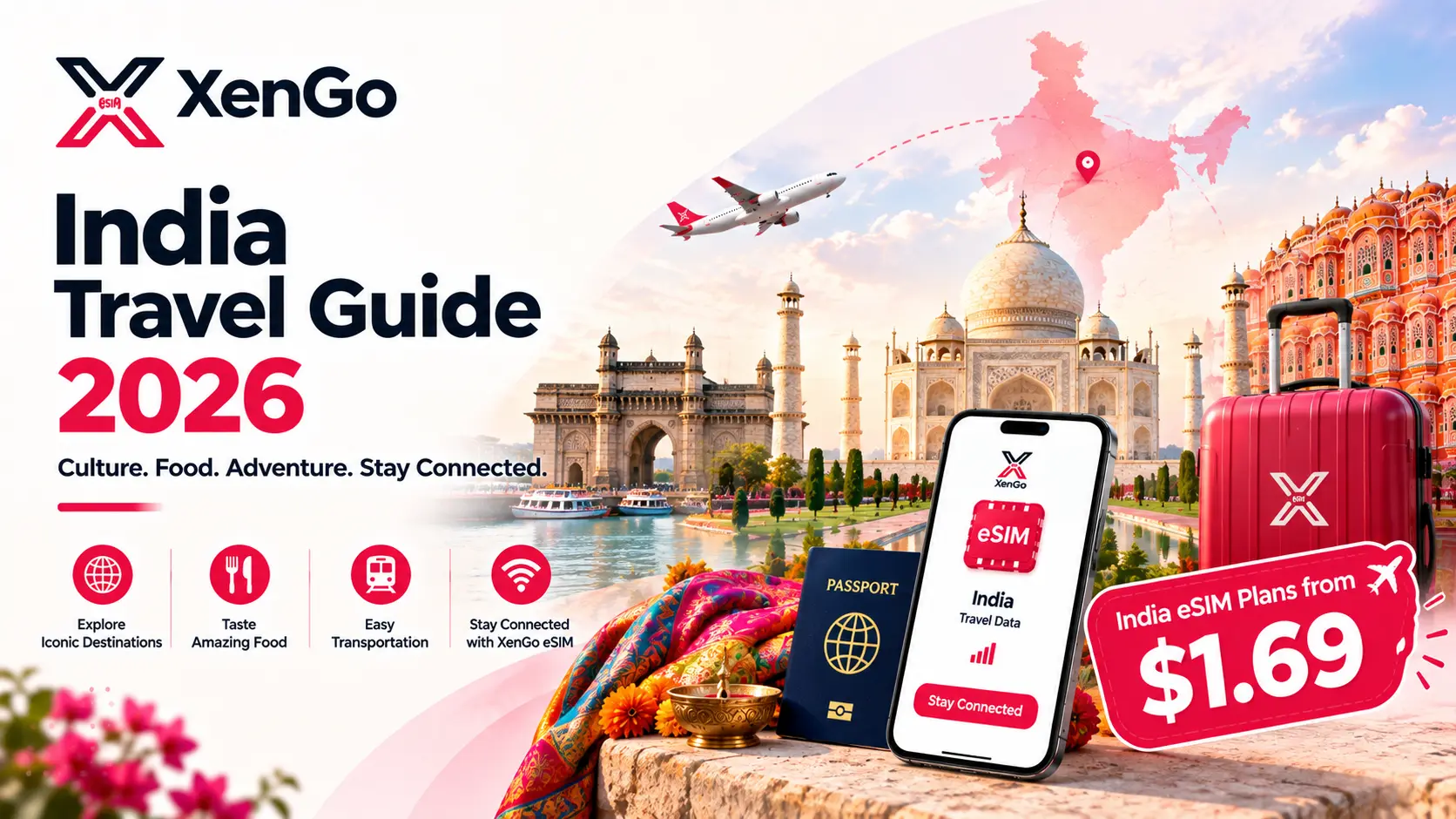
With XenGo India eSIM plans starting from just $1.69, you can arrange your travel connectivity before your flight and arrive ready to navigate, book rides, translate menus, message family, and explore.
Why Should You Visit India?
India is one of the world's most diverse travel destinations.
Its appeal isn't just about famous landmarks. It's the combination of history, food, landscapes, architecture, festivals, traditions, and everyday life that makes traveling through India such a memorable experience.
Depending on your itinerary, you can experience:
- Historic forts and palaces
- The Taj Mahal and Mughal architecture
- Himalayan mountain landscapes
- Tropical beaches
- Kerala's famous backwaters
- Colorful markets and bazaars
- Ancient temples
- Wildlife and national parks
- World-famous Indian cuisine
- Vibrant festivals and cultural celebrations
The important thing is to avoid treating India like a destination you can finish in one vacation.
Instead, choose a region and experience it properly.
When Is the Best Time to Visit India?
There isn't one perfect month for every part of India.
The country is enormous, and its climate varies significantly between regions. Your ideal travel season depends heavily on whether you're visiting northern cities, Rajasthan, the Himalayas, southern India, or the coast.
October to March — Great for First-Time Travelers
For many popular destinations, October through March is one of the most comfortable periods to travel.
The weather is generally more pleasant for sightseeing in places such as Delhi, Agra, Jaipur, Jodhpur, Udaipur, and other parts of northern and western India.
Best for:
- Delhi
- Agra
- Rajasthan
- Mumbai
- City sightseeing
- Cultural attractions
- Outdoor exploration
April to June — Better for Mountains
Temperatures can become extremely hot across parts of the Indian plains during these months.
However, this can be a good period for travelers heading toward higher-altitude destinations and Himalayan regions.
Consider:
- Himachal Pradesh
- Uttarakhand
- Ladakh
- Himalayan hill stations
July to September — Monsoon Adventures
The monsoon changes the experience completely.
Some regions become extremely green and scenic, while heavy rainfall can make transportation and outdoor activities less predictable.
Kerala can be particularly beautiful during and after the monsoon season.
If you're traveling during this period, check regional weather conditions before finalizing your itinerary.
Where Should You Go in India?
The biggest mistake first-time visitors can make is trying to visit too many places.
India is huge.
Instead of spending most of your vacation sitting on trains, buses, or airplanes, choose a region and explore it properly.
Here are some of the best starting points.
1. Delhi — Your Introduction to India
Delhi is one of the best places to begin a first trip to India.
The city combines centuries of history with modern shopping districts, restaurants, markets, monuments, and an energetic street culture.
Don't miss:
- Red Fort
- India Gate
- Humayun's Tomb
- Qutub Minar
- Old Delhi
- Chandni Chowk
Give yourself at least a couple of days to experience both historic and modern Delhi.
2. Agra — See the Taj Mahal
Agra is most famous for one landmark: the Taj Mahal.
But the city offers more than a quick photo stop.
Agra Fort and other historical sites make the city worth including in a northern India itinerary.
A popular route is
Delhi → Agra → Jaipur
This is often called part of India's "Golden Triangle" route.
3. Rajasthan — Forts, Palaces & Desert Landscapes
If you want India's royal side, Rajasthan should be high on your list.
Cities such as Jaipur, Udaipur, and Jodhpur offer a combination of colorful markets, historic forts, grand palaces, traditional crafts, and desert landscapes.
Popular stops include:
- Jaipur
- Udaipur
- Jodhpur
- Jaisalmer
- Pushkar
Rajasthan is particularly appealing to travelers interested in architecture, photography, history, and culture.
4. Mumbai — India's City That Never Stops
Mumbai feels completely different from Rajasthan.
It is fast, crowded, modern, historic, and full of energy.
Explore the Gateway of India, historic neighborhoods, markets, restaurants, waterfront areas, and the city's famous food scene.
Mumbai is also a great destination if you want to experience contemporary Indian city life rather than focusing only on historical attractions.
5. Kerala — Slow Travel at Its Best
Kerala offers a completely different side of India.
Think tropical landscapes, palm trees, tea plantations, beaches, traditional food, and peaceful waterways.
Popular experiences include:
- Kerala backwaters
- Houseboat trips
- Munnar tea plantations
- Kochi
- Ayurvedic wellness experiences
- Local South Indian cuisine
Kerala is particularly suitable for travelers who want a slower and more relaxing part of their India trip.
6. Goa — Beaches, Food & Relaxation
If your ideal vacation includes beaches, relaxed evenings, seafood, cafes, and coastal scenery, Goa is an easy choice.
It's also a good place to add a few slower days after a busy city-and-culture itinerary.
7. Varanasi — A Completely Different Experience
Varanasi is one of India's most distinctive destinations.
The city is deeply connected to Hindu religious traditions and is famous for the ghats along the Ganges.
For first-time visitors, Varanasi can feel intense and unfamiliar. That's part of what makes it memorable.
Travel respectfully, take your time, and learn about the cultural significance of the places you're visiting.
How Many Days Do You Need in India?
India is too large to experience properly in just a few days.
For a first trip, 10 to 14 days can give you enough time to explore one region without constantly changing hotels.
If you have 2 to 3 weeks, you can create a more relaxed itinerary or combine two nearby regions.
Example: 7-Day First India Trip
Day 1: Arrive in Delhi
Day 2: Explore Old and New Delhi
Day 3: Travel to Agra and visit the Taj Mahal
Day 4: Travel to Jaipur
Day 5: Explore Jaipur
Day 6: Continue exploring Rajasthan
Day 7: Return toward Delhi or continue to your next destination.
Don't worry if you can't fit everything into one trip.
India will still be there for your next adventure.
How Do You Get Around India?
India offers almost every type of transportation imaginable.
Your best option depends on the distance, budget, and amount of time available.
Trains
India's railway network is one of the country's most useful ways to travel between major destinations.
Trains can be especially practical for longer journeys where you want to save time and experience a different side of the country.
Travel Tip: Book popular train routes ahead of time, particularly during holidays and busy travel seasons.
Domestic Flights
India is enormous, so flying can make sense when you're traveling between distant regions.
For example, flying can save significant time when connecting northern India with destinations in the south.
Metro Systems
Several major cities have metro systems that can make getting around much easier.
Delhi's metro, in particular, can be extremely useful for visitors.
Ride-Hailing & Taxis
App-based transportation can be convenient in major cities.
Always confirm the destination and fare before starting the journey, and use reputable transportation options whenever possible.
Auto-Rickshaws
For short trips, auto-rickshaws are one of the classic ways to get around.
They're convenient, but it's a good idea to confirm the price before starting if a meter isn't being used.
What Does a Trip to India Cost?
One of India's biggest advantages for international travelers is the variety of budgets it can accommodate.
Your actual spending will depend heavily on your destination, accommodation, transportation choices, and travel season.
Budget Travel
Budget travelers can save by choosing hostels, local restaurants, public transportation, and affordable accommodation.
Mid-Range Travel
A mid-range trip can include comfortable hotels, private transportation when needed, better restaurants, and a mix of trains and domestic flights.
Luxury Travel
India also has an impressive luxury travel scene.
Think heritage palaces, five-star hotels, private tours, premium trains, private drivers, and high-end dining.
The best strategy is to decide where you want to spend more and where you're happy to keep things simple.
What Food Should You Try in India?
You haven't really experienced India until you've explored its food.
And there's no single thing called "Indian food."
Cuisine changes dramatically from region to region.
North India
Try:
- Butter chicken
- Tandoori dishes
- Naan
- Dal
- Chole
- Kebabs
South India
Try:
- Dosa
- Idli
- Sambar
- Vada
- Coconut-based curries
- South Indian rice dishes
Street Food
Look out for:
- Samosas
- Pani puri
- Chaat
- Vada pav
- Kachori
- Jalebi
Food Tip: For street food, choose busy vendors where food is being prepared fresh and there's a steady flow of customers.
What Should You Know About Indian Culture?
India has incredible cultural diversity, and a little preparation can make your trip much more comfortable.
Dress Respectfully
When visiting temples, religious sites, or rural communities, dress more conservatively and follow local expectations.
Remove Your Shoes When Required
Some temples and religious places require visitors to remove their footwear before entering.
Look for signs or follow the example of local visitors.
Ask Before Taking Photos
Not every person, religious ceremony, or location should automatically be photographed.
When in doubt, ask first.
Learn a Few Local Words
English is widely used in many tourist areas, but learning a few simple Hindi phrases can make interactions more enjoyable.
- Namaste — Hello
- Dhanyavaad — Thank you
- Kitne ka hai? — How much is it?
- Haan — Yes
- Nahi — No
What Should You Pack for India?
Your packing list should depend on the region and season you're visiting.
But these items are useful for many India trips.
☐ Lightweight clothing
☐ Comfortable walking shoes
☐ A light jacket or warm layers
☐ Modest clothing for religious sites
☐ Sunscreen
☐ Sunglasses
☐ Reusable water bottle
☐ Power adapter
☐ Personal medication
☐ Travel documents
☐ Copies of important documents
☐ Phone with eSIM support
☐ Travel insurance information
If you're visiting multiple regions, check the weather for every destination rather than packing for "India" as if the entire country has the same climate.
How Can You Stay Connected in India?
Having mobile data while traveling isn't just about posting photos.
It can make your entire trip easier.
You may need internet access to:
- Find your hotel
- Use maps
- Translate signs and menus
- Book transportation
- Check train information
- Contact your hotel
- Message family
- Use travel apps
- Find restaurants
- Research attractions
- Handle unexpected changes to your itinerary
And this is where arranging your connectivity before your trip can save you time.
Instead of arriving at the airport and searching for a physical SIM card, an eSIM can let you prepare your mobile data before you leave home.
Stay Connected in India with XenGo eSIM
If your smartphone supports eSIM, XenGo gives you a simple way to prepare your India mobile data before your trip.
India eSIM Plans from Just $1.69
XenGo India eSIM plans start from $1.69, giving travelers an affordable way to arrange mobile data before arriving in India.
Why use an eSIM for your India trip?
- No physical SIM card to replace
- Set up your travel data before departure
- Stay connected when you arrive
- Keep your regular SIM available when supported by your phone
- Avoid searching for a SIM shop immediately after landing
- Easily manage your travel connectivity
When Should You Install Your India eSIM?
Ideally, prepare your eSIM before you leave.
This gives you time to check that the installation process works correctly and ensures you're not trying to figure everything out while standing in an unfamiliar airport.
Pro Tip: Install and configure your eSIM before your flight, then follow the activation instructions for your plan. When you arrive, make sure your travel eSIM is selected for mobile data.
Planning your India adventure?
Get your India eSIM with XenGo and stay connected from the moment your journey begins.
India Travel Safety Tips for First-Time Visitors
India is an exciting destination, but first-time travelers should use the same practical awareness they would use anywhere unfamiliar.
1. Keep Your Important Documents Secure
Keep your passport, visa information, insurance details, and important bookings accessible but protected.
2. Use Reliable Transportation
For airport transfers and late-night journeys, use reputable taxis or established ride-hailing services where available.
3. Be Careful With Your Belongings
Busy markets, stations, and tourist attractions can become crowded. Keep valuables secure and avoid carrying unnecessary items.
4. Stay Hydrated
India can become very hot, particularly in some regions and seasons. Carry water and plan breaks during long sightseeing days.
5. Be Careful With Food and Water
If your stomach isn't used to local food, introduce new dishes gradually and choose reputable food vendors.
6. Respect Local Customs
Dress appropriately at religious sites and follow local rules around photography and behavior.
7. Keep Mobile Data Available
Being able to access maps, translation tools, transportation apps, and emergency contacts can make a big difference when you're traveling independently.
India Travel Itineraries: Which One Is Right for You?
Your perfect India itinerary depends on what kind of traveler you are.
For History Lovers
Delhi → Agra → Jaipur → Jodhpur → Udaipur
For Beach & Relaxation
Goa → Kerala → Kochi → Munnar
For Food Lovers
Delhi → Lucknow → Mumbai → Hyderabad → Chennai
For Nature Lovers
Kerala → Munnar → Himachal Pradesh → Uttarakhand
For First-Time Visitors
Delhi → Agra → Jaipur
The last option is particularly useful if you only have one week and want a relatively focused introduction to India's history and culture.
10 Things to Know Before Your India Trip
1. India is bigger than it looks on a map.
Don't build an itinerary that requires constant long-distance travel.
2. Plan around the weather.
India doesn't have one universal travel season.
3. Give yourself extra travel time.
Transportation can sometimes take longer than expected.
4. Try regional food.
Don't limit yourself to the same dishes everywhere.
5. Carry some cash.
Cards and digital payments are common in many places, but cash can still be useful for smaller businesses and certain situations.
6. Respect religious spaces.
Follow local rules regarding clothing, footwear, photography, and behavior.
7. Don't overpack.
You'll be moving around, and India offers plenty of shopping opportunities.
8. Save important addresses offline.
Your hotel address can be extremely useful if you lose connectivity.
9. Prepare your phone before departure.
Check that your smartphone supports eSIM and set up your travel data before flying.
10. Leave room for spontaneity.
Some of the best travel experiences aren't on your itinerary.
A Simple 14-Day India Travel Plan
If you're visiting India for the first time and have two weeks, here's one possible route.
Days 1–3: Delhi
Explore Old Delhi, historical monuments, markets, and modern neighborhoods.
Days 4–5: Agra
Travel to Agra and visit the Taj Mahal and Agra Fort.
Days 6–9: Jaipur & Rajasthan
Explore Jaipur's forts, palaces, markets, and local cuisine.
Days 10–11: Udaipur
Slow down and experience lakes, palaces, and the more relaxed atmosphere of Udaipur.
Days 12–14: Return & Depart
Return toward Delhi or connect onward depending on your flight.
This is only one example. If beaches or nature are more important to you, replace Rajasthan with Goa or Kerala.
India Travel FAQ
Q: Do I need a visa to visit India?
A: Visa requirements depend on your nationality, passport, purpose of travel, and current Indian immigration rules. Many international travelers can apply for an Indian e-Visa, but you should always check the latest requirements through the official Indian government sources before booking or traveling.
Q: What is the best month to visit India?
A: For many popular tourist destinations, October through March offers comfortable conditions for sightseeing. However, the ideal period depends on your destination. Himalayan regions can be better during warmer months, while parts of southern India have different seasonal patterns.
Q: How many days should I spend in India?
A: For a first trip, 10–14 days is a good starting point. Two to three weeks gives you more flexibility and lets you explore a region without rushing.
Q: Is India expensive to visit?
A: India can work for a wide range of budgets. Budget travelers can use affordable accommodation and local transportation, while luxury travelers can choose premium hotels, private transportation, and high-end experiences.
Q: What is the cheapest way to get mobile data in India?
A: An eSIM can be a convenient and affordable option for travelers with compatible smartphones. XenGo India eSIM plans start from $1.69, allowing you to arrange your travel connectivity before you arrive.
Q: Can I use an eSIM in India?
A: If your smartphone supports eSIM technology and your selected plan supports your destination, you can use an eSIM for mobile data while traveling in India. Check your phone's eSIM compatibility before purchasing.
Q: Should I buy an India eSIM before I travel?
A: Yes, preparing your travel eSIM before departure can make arrival easier. You can complete the setup ahead of time instead of looking for a physical SIM immediately after landing.
Q: What should I do if I only have one week in India?
A: Choose one compact itinerary rather than trying to see the whole country. Delhi, Agra, and Jaipur are a popular combination for first-time visitors because they can be connected into one focused route.
Final Thoughts: India Is Better When You Don't Rush It
India isn't a destination that rewards rushing.
Its biggest attraction is the variety—from the architecture of Delhi and Agra to the palaces of Rajasthan, the beaches of Goa, the backwaters of Kerala, and the spiritual atmosphere of Varanasi.
Instead of trying to check every famous destination off a list, choose a region that matches the kind of experience you want.
Plan your major transportation, understand the local customs, prepare your travel documents, pack appropriately for the season, and make sure your phone is ready before you fly.
And don't forget your mobile data.
With XenGo India eSIM plans starting from $1.69, you can arrange your connectivity before departure and focus on the part that actually matters: experiencing India.
Ready for your India adventure?
Explore India with confidence and stay connected with XenGo eSIM.